Bangladesh’s 2026 Election: Where Are the Women?
Source: The Diplomat
For a nation that has seen not one but two female prime ministers, the recently concluded elections showed a dismal reality. Although half of Bangladesh’s voters are women, the representation of women in politics continues to be low. Only 78 women candidates contested the February 12 elections, out of 1,981 candidates – a meager 3.93 percent. Just seven women actually won election, out of 300 directly elected seats.
The Bangladesh Nationalist Party (BNP), which won the elections handily, accounted for six of those women MPs – but it fielded only 10 women candidates for the elections out of the 300 contested constituencies. Only three women were sworn in as union ministers by the Tarique Rahman Cabinet, out of 50 Cabinet members in total.
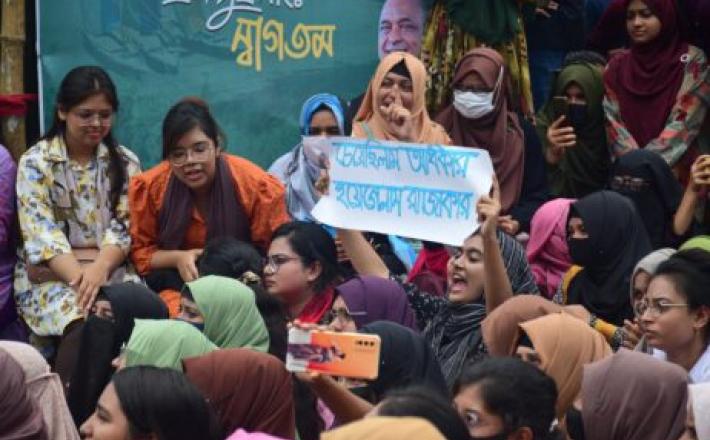
The present political landscape of Bangladesh reflects a nation at odds with women’s place in public life. This was most evident in the case of the National Citizen Party (NCP), formed by student leaders who led the uprising against the ousted Prime Minister Sheikh Hasina. The NCP has few women leaders, although many women participated in the street protests of July-August 2024. The pre-poll alliance between NCP and Jamat-e-Islami (JI) was seen by many women leaders of the NCP as abandoning the cause of gender equality.
For a nation that has seen not one but two female prime ministers, the recently concluded elections showed a dismal reality. Although half of Bangladesh’s voters are women, the representation of women in politics continues to be low. Only 78 women candidates contested the February 12 elections, out of 1,981 candidates – a meager 3.93 percent. Just seven women actually won election, out of 300 directly elected seats.
The Bangladesh Nationalist Party (BNP), which won the elections handily, accounted for six of those women MPs – but it fielded only 10 women candidates for the elections out of the 300 contested constituencies. Only three women were sworn in as union ministers by the Tarique Rahman Cabinet, out of 50 Cabinet members in total.
The present political landscape of Bangladesh reflects a nation at odds with women’s place in public life. This was most evident in the case of the National Citizen Party (NCP), formed by student leaders who led the uprising against the ousted Prime Minister Sheikh Hasina. The NCP has few women leaders, although many women participated in the street protests of July-August 2024. The pre-poll alliance between NCP and Jamat-e-Islami (JI) was seen by many women leaders of the NCP as abandoning the cause of gender equality.